BACK TO WORKSHEETS

Let’s focus on refraction.
Refraction is how we describe light travelling from one medium to another.
When light shines through a glass of water, the ray of light is bent as it moves from one density of material to another.
This creates an illusion of something looking bent or misaligned.
Take this glass of water for example - we can see the straw clearly, but we can also see that the straw looks bent or broken inside the glass.
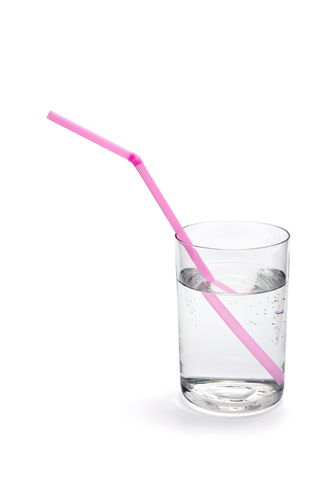
Has the straw bent inside the glass?
No, but the speed of the light travelling through has been affected. Because the light is travelling through different mediums, the light travels slower through the water than the air.
Refraction is the change in speed and direction of a light wave as it passes from one medium to another.
If the glass was empty, the light would travel in straight lines through it and we would see the glass and straw clearly.
Once the water is in the glass, the light waves now have to travel through air into water. The light can travel quicker through air than through water, so we actually see light waves slow down and change direction, due to the change in material.
Of course, we can only see this with transparent or translucent materials, such as water, clear lemonade or clear apple juice.
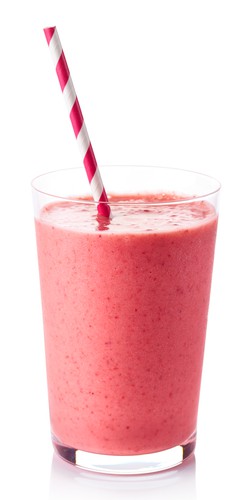
If the liquid were a milkshake, smoothie or a cup of tea, it would be opaque and we couldn't see through it.
Refraction was first discovered by Willebrord Snell but was further investigated by Isaac Newton. Newton shone a light through a prism, which allowed the visible colour spectrum to be seen. Have you ever spotted a mini rainbow on a wall or shining through a sprinkler? This happens when the light shines through the glass or water droplets at just the right moment, separating white light into the visible spectrum.
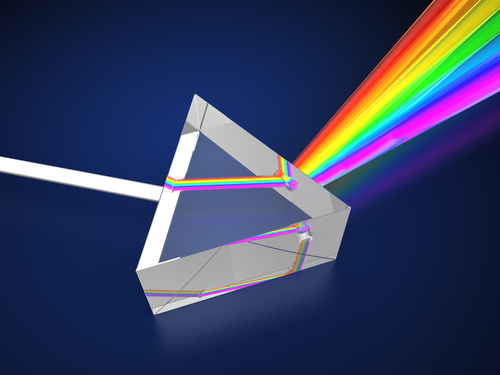
Much like the glass of water, when the light shines through the glass prism, the speed of the light changes and the light rays are bent. Then, as the light exits the prism, the speed changes again and bends a second time. This phenomenon is light refraction and it was discovered by Sir Isaac Newton.
He discovered the visible light spectrum and the seven colours it is made up of: red, orange, yellow, green, blue, indigo and violet. So we kind of have Isaac to thank for the colours of the rainbow!
When these coloured particles are combined, it appears as white light to our eyes.
Ready to revise refraction? Let’s go!